UNFINISHED BUSINESS – THE WALL GUIDE
The history of interior design didn’t start with furniture, it started with cave paintings in the prehistoric era to Egyptian murals and Roman frescoes. The wall has always been our most enduring canvas. The renaissance period gave us the moveable canvas & the ability to choose what goes where. This was celebrated during the victorian era with salon style walls paced with art to signify wealth & worldliness. Modern times gives rise to graffiti and murial art while the present day hosts a variety of options depending on individual style & personality.
From tapestries and oil paintings to watercolours, sketches, prints, posters and photographs.
Art can be displayed to add visual interest to a space, serve as a focal point, drawing the eye to bridge the gap between ceiling and floor and probably most importantly because it evokes emotion.
Where to source..
Art doesn’t have to be expensive. Personal photographs look beautiful, especially in black and white. Postcards and posters from flea markets, museums and exhibitions can add character & warmth to your home.
Take a look at Londons affordable art fair snd the summer exhibition at the Royal academy of art where you can find unique pieces. You can find upcoming artists on social media with beautiful commissions or even try creating your own pieces on canvas with acrylics or pencil. Pressed flowers and photographs from nature or a collection of hand sketches can serve as a visual anchor in your home.
Art can play with the scale of a room & is one of the best optical illusions in the tool kit. A large piece of art can make a room feel bigger; known as the window effect. While hanging art just above the visual field can make the ceiling feel higher. Art doesn’t just sit on the wall it punches & pulls the walls where you want them to be.
There’s an age old design phrase if clothes make the man, the frame makes the picture.
The frame is very much dictated to by the picture. Here’s a nice chance to mix old with new, A vintage French frame can be a stunning centre piece in a contemporary home.
HOW TO DISPLAY ART
As a general rule the middle of the picture should be 145cm from the floor; roughly eye level. Of course with high ceilings >250cm then go for the two thirds rule. If you have picture rails in your home why not hang your pictures from here.
A grid pattern
Displaying art in a grid pattern works well if you have multiple pictures the same size. Three in a row or two and two. Depending on the size of the pictures and wall but you can go quite large; making. a striking focal point.
Paneling
Using paneling to frame art is back on trend. There are different styles of paneling to suit your style and the character you wish to create. .
Centre piece
A show stopper this will be a large piece as a focal point. This centre piece will blend and marry the other elements in your home to create harmony.
Picture TV
The picture TV is a dream come true – you can now conceal your TV with multiple digital picture options. Either from your own catalogue or a subscription.
Stand alone piece to close a blank wall
Art can be a great way to bridge the gap and connect spaces; on landings, corridors and in large spaces. Get the proportions right and it will sing.
Above a mantel or console
These areas always need a lift. Art above a mantel will draw the eye upwards, creating balance.
Gallery wall
These are fun and can be done with all sorts of collectable items, vintage pieces, plates and pictures have all been used to make a feature wall. It can be especially fun in a dark, north facing room or up a stair case to add depth and warmth.
Maximalist style – no wall uncovered
Displaying large collection of art around the home can be really fun and a great talking point. Show stoppers placed in the hallway can really make people linger, adding interest and movement to the space.
Accent pieces to soften walls
Sprinkling art around is a really cute way to being personality and life into your home.
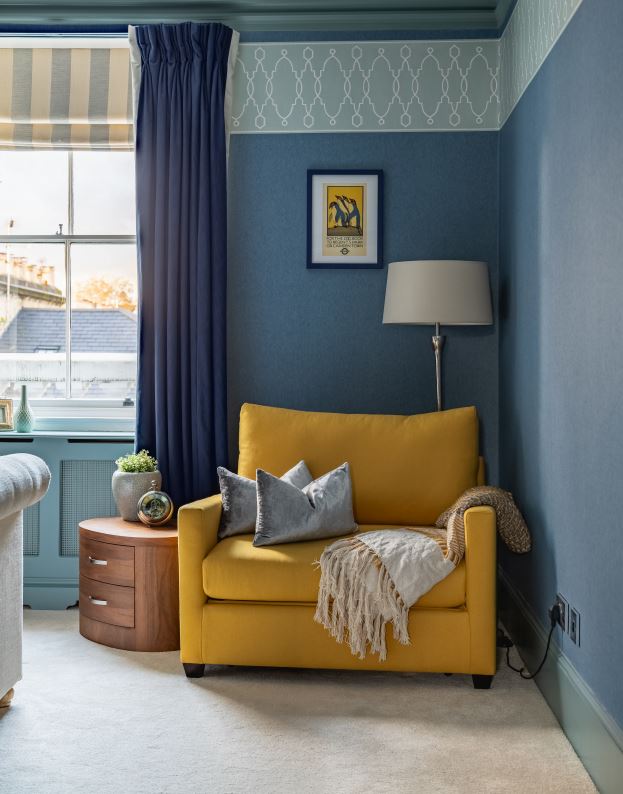
A pop of interest; to liven up a dull corner or connect a colour scheme.
Art is used here to bridge the void & connect the other elements within the space

TOP TIP
Template your art on pieces of paper to arrange on the wall first, use masking tape or arrange on the floor to make sure you have just the right formation.